Probation playbook |
The complete probation success system
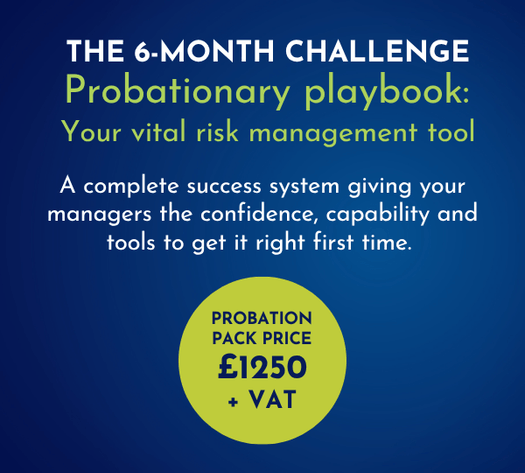
Your vital risk management tool
The six-month unfair dismissal challenge
The Employment Rights Act will reduce unfair dismissal rights from two years to six months in January 2027. With 6.3 million employees expected to gain earlier unfair dismissal protection, the need to strengthen probation processes starts now (GOV).
The Ministry of Justice has already revealed that there has been a 50% increase in single Employment Tribunal claims this year, even before the January changes come into effect. Organisations hiring today should be reviewing how managers set expectations, monitor performance and make probation decisions.
Download our Probationary playbook overview to explore the practical tools, guidance and resources that can help build manager confidence, improve consistency and support better probation decisions.
Build the right foundations
- Employment contract wording
- Recruitment documentation
- Onboarding checklist
Support confident conversations
- Probation guidance
- Review meeting agenda
- Outcome letters
Boost manager capability
- Setting SMART objectives eLearning
- Performance reviews eLearning
- Managing probation periods eLearning
Expert support when you need it
- 30-minute coaching consultation
- Exclusive 10% course discount
Download today
FAQs
Employees hired from July 2026 will hit the six-month mark on or after 1 January 2027, meaning current six-month probationary periods may no longer provide a “buffer” for dismissal. Employers should consider shifting to a three-month standard probation with a one-month extension option to ensure final decisions are made well before the six-month protection threshold.
From 1 January 2027, the law removes the cap on compensation for unfair dismissal, meaning tribunals can now order payouts based on an individual’s total actual losses, including lost salary, bonuses, share schemes, and pension contributions, with no upper limit.
For high earners, this is a massive change as they are no longer restricted by a fixed worst-case scenario figure, which used to make calculating potential payouts fairly straightforward. Because of this, employers lose the ability to easily price in the risk of a dismissal and moving forward, high-stakes exits will be much more costly and complex to negotiate, making it essential to have a more robust, documented evidence for every dismissal to avoid the threat of a massive, uncapped tribunal award.
To keep the probation process fair and legally sound, employers must equip managers to understand their responsibilities within a shorter probation period window, encouraging them support employees through regular check-ins. Regular, informal dialogue helps managers spot performance gaps earlier. Without these touchpoints, it’s easy opportunities to make practical adjustments that help any new hire succeed.
This is especially relevant when managers are less experienced in supporting different ways of working, such as when someone has a specific disability or a neurodivergent profile. Every team member deserves equal support, but managers often lack the confidence to ask about individual needs. Reasonable adjustments can resolve a gap before it becomes a formal issue, which improves the overall employee experience. Coaching managers to have the right conversations and the right time reduces risk.
You may also be interested in...
21 Oct

Preventing sexual harassment at work: resources for employers
Preventing sexual harassment at work: is your orga...
15 Oct
On-demand | ‘Preventing Sexual Harassment at Work’ eLearning walkthrough
06 Oct
Collective consultation roadmap: Guide to navigating redundancy with confidence